what do you value?
The concept of value is one of the core pillars that differentiate mankind from the animal kingdom. A lion or a brook trout or a blade of grass or a peregrine falcon has an innate sense of value that is unwavering - anything that benefits the species has value and should be pursued; anything that threatens the species has no value and should be avoided.
Add free will into the equation and suddenly things get a lot more complex. While animals have no choice but to act in their own best interest, mankind can pick and choose what seems to be in our best interest based on our own sensory inputs, our thoughts and emotions, the opinions of others, and so on.
In other words, we can choose what to value and how much value to give it.
Determining value can be very elementary when it comes to common goods and services. Time plus materials, supply and demand and all that. But our free will makes the very definition of “art” open to debate, and hence placing value on art is surely one of the most nebulous tasks known to man. Sure, time plus materials and supply and demand and all that, but in the end it really comes down to personal preference.
fiedler’s values
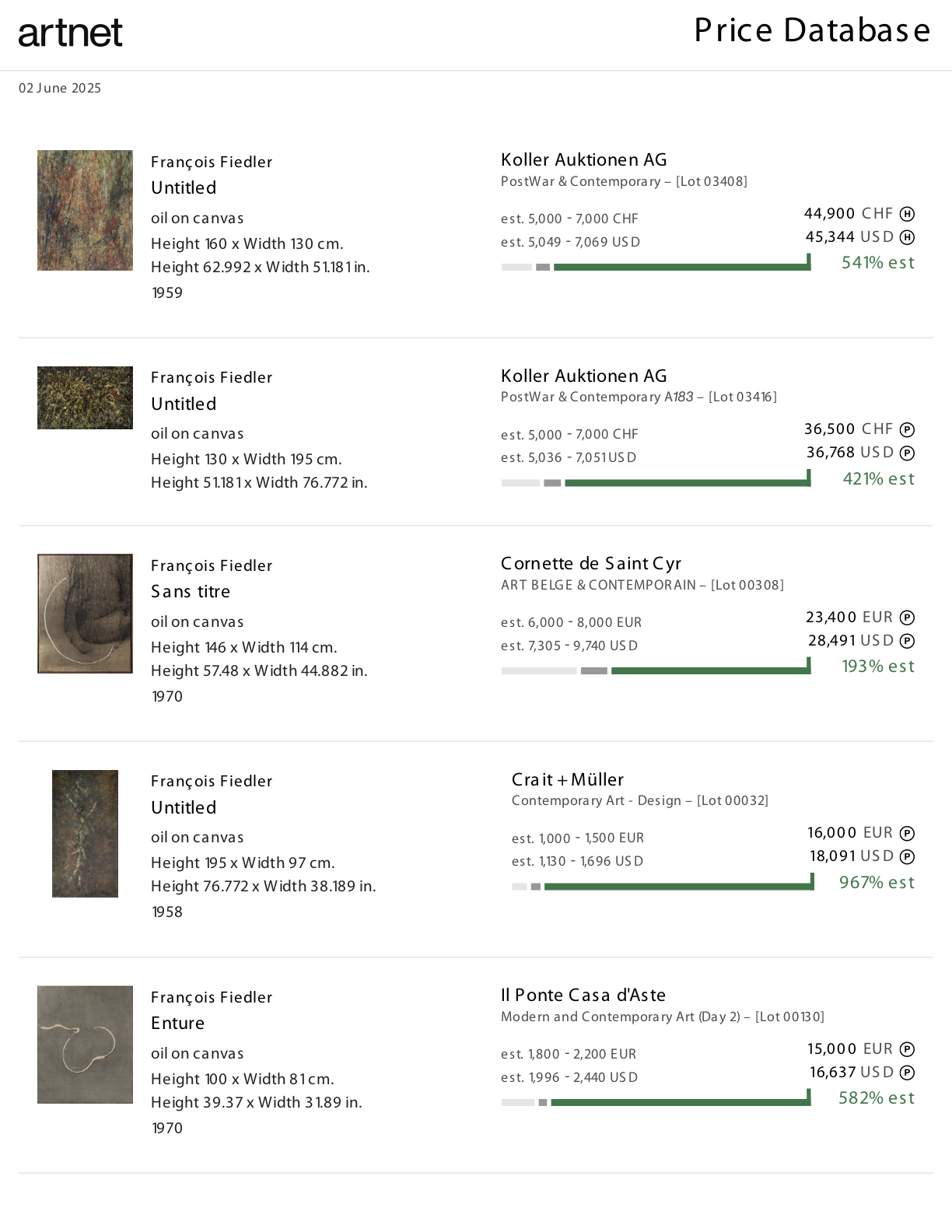
In the graphics below you will find some historical sales figures for François Fiedler and one of his main contemporaries. These figures were gleaned from an online resource called artnet. They are based on sales figures reported by major auction houses and galleries, but because they contain only information given to artnet by their partner organizations, they are by no means comprehensive. The figures do not include data from private sales, nor from auction houses or galleries that do not divulge their sales to artnet, but neverthless they do offer some valuable insights into the ever changing market for artworks.
As mentioned elsewhere, Fiedler was a comtemporary of not only Dan Kramer and Clo Vanseco, but many other artists whose works reached the pinnacle of perceived value in the world of art.
He was discoverd on the streets of Paris by Joan Miró.
His works were shown in Paris, Zurich, New York, and Milan alongside those of Pablo Picasso, Miró, Marc Chagall, Georges Braque, and Wassily Kandinsky.
And through our archives we know that Fiedler valued honesty, creativity, and respect for nature and its processes, and every artwork was a marriage of his creative visions and natural forces at play.
As also mentioned previously, he was considered “next in line” by Aimé Maeght before Maeght passed away. His painstaking processes precluded him from being as prolific as other artists, and his reclusive demeanor and lack of self promotion put him in the shadows of the other greats of his time.
So what do you see in Fiedler’s life, art, and career that brings value to you?
fiedler vs pollock
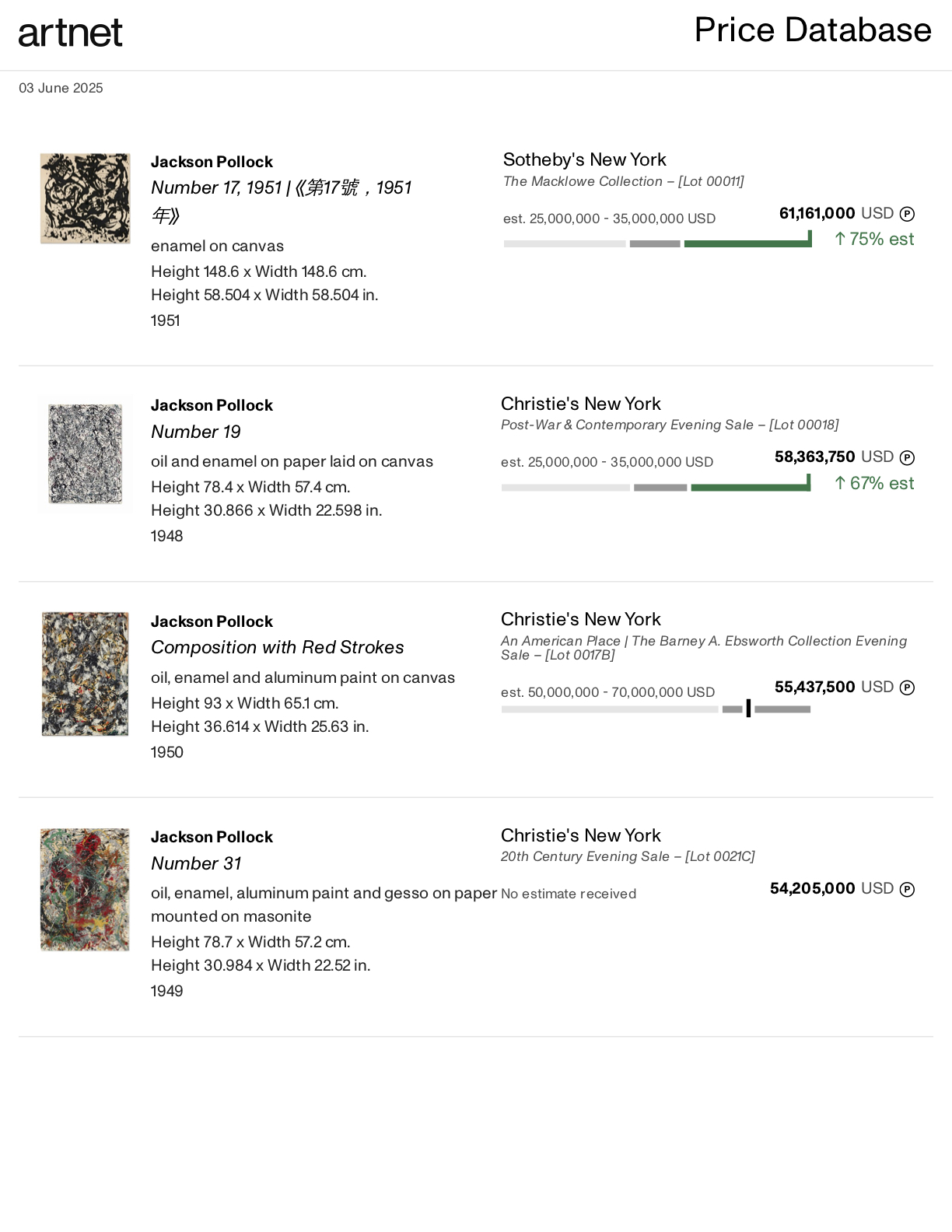
Have a look at the charts below which show Fiedler’s documented sales versus those of Jackson Pollock, ask yourself if the latter’s works are really 1,000 times “better” than Fiedler’s (whatever that means), and the nebulous nature of placing a monetary value on art becomes blatantly obvious.